

Article: The Gold Standard: How Many Microns of Gold Plating Really Matter

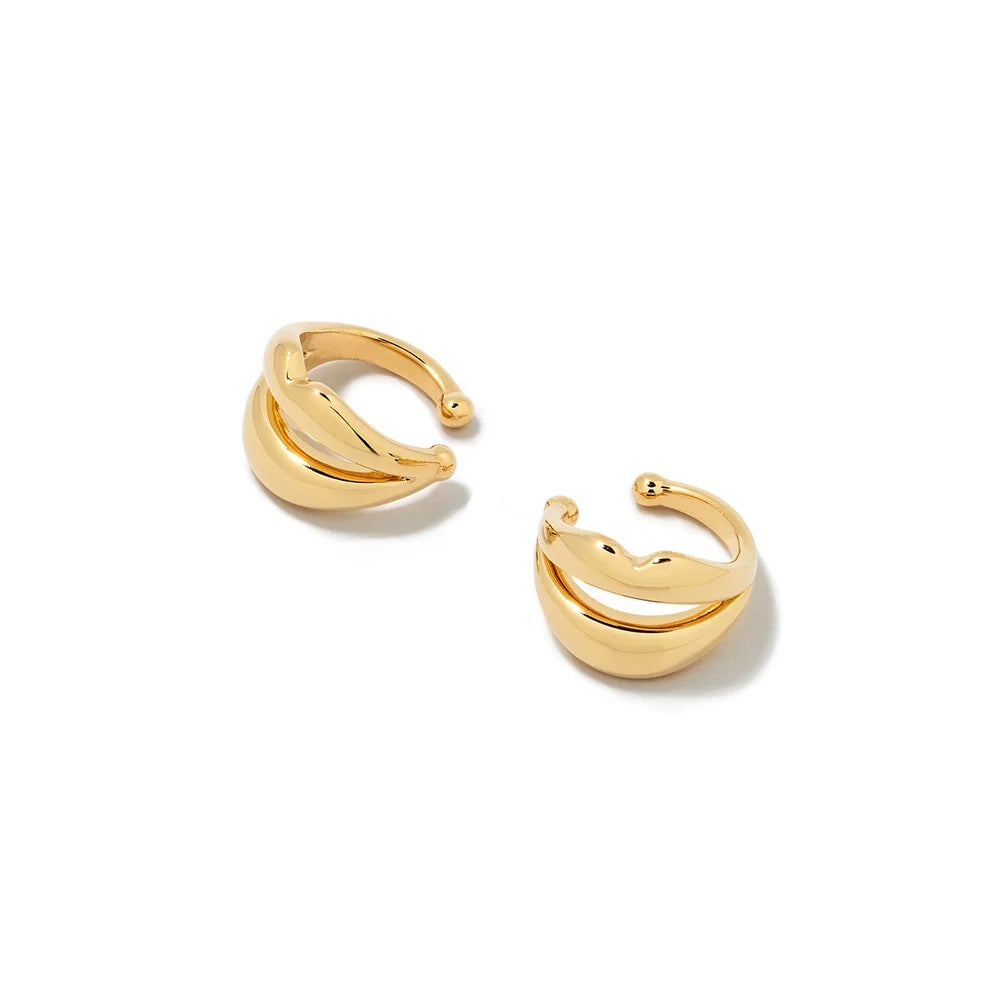
The Gold Standard: How Many Microns of Gold Plating Really Matter
What is a micron in gold plating?
A micron (µm) is one-thousandth of a millimeter. Gold plating is a thin layer of real gold bonded onto a base metal, usually brass or sterling silver, with an electric current. The thickness of that layer, measured in microns, is the single biggest factor in how long a plated piece keeps its color.
Gold plating thickness: what the numbers mean
|
Thickness |
What it's usually called |
What to expect with daily wear |
|
Under 0.5 micron |
Flash plated / gold wash |
Can fade within weeks |
|
0.5 to 1 micron |
Standard gold plated |
Fine for pieces with little skin contact, like brooches; wears faster on rings and bracelets |
|
2.5 microns |
Heavy gold electroplate; the minimum for vermeil |
Noticeably more durable |
|
3+ microns |
Thick gold plating |
Built for regular wear and stacking |
|
Solid gold |
No plating; gold all the way through |
Lifetime piece; can be repaired and polished |
In the U.S., the Federal Trade Commission's Guides for the Jewelry Industry set minimums for these labels. A piece can only be called "heavy gold electroplate" with at least 2.5 microns of gold of 10 karats or more. A piece can only be called "vermeil" if it is sterling silver coated with at least 2.5 microns of gold of 10 karats or more.
Is 3 microns of gold plating good?
Yes. Three microns is above the 2.5-micron threshold the FTC uses for heavy gold electroplate, and three to six times thicker than common 0.5 to 1 micron plating.
That’s why Minnie Lane plates its 14k gold-plated jewelry up to 3 microns, depending on how much each piece touches the skin. Rings, necklaces, and bracelets, which get the most wear, are plated at 3 microns. Founder and designer Mimi Phillips started the brand to fill the gap between fine jewelry and mass-produced fast fashion. The goal is pieces that wear like a favorite, not like a one-season trend.
Gold vermeil vs. gold plated: what's the difference?
The difference comes down to two things: the base metal and the minimum thickness.
-
Gold vermeil must have a sterling silver base and at least 2.5 microns of gold (10k or higher). Some jewelers also add a thin barrier layer between the base metal and the gold to help the plating last. All Minnie Lane jewelry is nickel free.
-
Gold plated can use any base metal (often brass), and there's no legal minimum thickness for the general term, which is why quality varies so much.
Minnie Lane’s vermeil pieces have 2.5 microns of 14k gold over sterling silver. Its gold-plated pieces have 1–3 microns of 14k gold over brass, depending on the piece: rings, necklaces, and bracelets have 3 microns, earrings have 2, and brooches and hair accessories have 1. Its silver- and rhodium-plated pieces are also plated over brass, up to 3 microns depending on the type of piece. That means the brand’s plated rings, necklaces, and bracelets actually have a thicker layer than its vermeil. The vermeil’s advantage is the precious-metal base.
Plated vs. vermeil vs. solid 14k gold: which should you buy?
-
Choose 14k gold plated (up to 3 microns) for statement and fashion-forward pieces, such as bold hoops, sculptural rings and cuffs, at an accessible price.
-
Choose gold vermeil if you want a precious-metal core.
-
Choose solid 14k gold for a lifetime piece you'll wear every day, everywhere: in the shower, at the gym, forever. Solid gold can also be repaired, and Minnie Lane reviews repairs for its solid 14k gold pieces.
-
Choose sterling silver for solid precious metal in a silver tone, at a lower price than gold.
Minnie Lane works in five materials: solid 14k gold fine jewelry, 14k gold vermeil, 14k gold plating, silver or rhodium plating, and sterling silver. All of it is nickel free, with sterling silver earring posts on all plated and vermeil pieces.
How to make gold-plated jewelry last longer
A thicker layer of gold is only part of the story. How you wear and store your pieces matters just as much.
-
Put jewelry on last. Let perfume, lotion and hair products dry first.
-
Avoid hand sanitizer and household cleaners while wearing plated pieces.
-
Take it off for swimming, showers and workouts. Long contact with water and sweat speeds up wear.
-
Clean gently. Wipe with a soft, untreated cloth like microfiber. Avoid polishing cloths, which contain compounds that can wear away plating.
-
Store pieces separately in a soft pouch or lined box so they don't scratch each other.
See Minnie Lane's full Metals & Materials guide for care steps for each metal.
Frequently asked questions
How many microns is good gold plating?
The right thickness depends on how much a piece rubs against skin and surfaces. Rings and bracelets get the most friction and benefit from 2.5 to 3 microns. Earrings see less friction and hold up well at around 2 microns, and pieces like brooches that rarely touch skin can be plated thinner. Plating under 1 micron is common in inexpensive jewelry and tends to wear through quickly. Minnie Lane plates its jewelry up to 3 microns, with the thickest plating on rings, necklaces, and bracelets.
Is 1 micron gold plating good?
One micron is the typical thickness for standard plated jewelry. It's fine for occasional wear, but it can show wear within months on rings and bracelets, which rub against surfaces. For rings and bracelets you plan to wear often, look for 2.5 to 3 microns.
Does 3-micron gold plating tarnish?
Gold is highly resistant to tarnish, but plating can wear thin over time and expose the base or barrier metal. A 3-micron layer takes much longer to wear through than standard plating, especially if you avoid chemicals, water, and abrasive cloths. Proper storage between wears also helps.
Is gold vermeil better than gold plated?
Not always. Vermeil guarantees a sterling silver base and at least 2.5 microns of gold. Well-made gold plating can be thicker. Minnie Lane’s gold-plated rings, necklaces, and bracelets have 3 microns, more than its 2.5-micron vermeil. Choose vermeil if you want a precious-metal core and thick plating for bold styles at a lower price.
Can gold-plated jewelry be replated?
Many jewelers can replate pieces, but results depend on the base metal and design. Because of plating production minimums, Minnie Lane isn’t able to replate individual plated or vermeil pieces, but we’re always happy to help. Email hello@minnielanedesigns.com and we can recommend a jeweler who offers replating. Minnie Lane also reviews repairs for its solid 14k gold jewelry.
Is Minnie Lane jewelry nickel-free?
Yes. All Minnie Lane jewelry is nickel-free, and all plated and vermeil earrings have sterling silver posts to help avoid sensitivities.
Minnie Lane is a woman-owned jewelry brand founded by designer Mimi Phillips in Nashville, Tennessee. Shop gold- and silver-plated jewelry, sterling silver, vermeil and solid 14k gold fine jewelry.